
article
SPRING | 2026

Are Police Roll Calls Still Necessary?
By Bill Styskal
Spring | 2026
In an era of mobile data terminals, real time intelligence sharing, body worn cameras, and instant messaging, some law enforcement leaders have begun to question whether traditional police roll calls are still necessary. The answer is not a simple yes or no. Roll calls are not inherently valuable because of tradition, but when executed with purpose, they remain one of the most effective leadership and safety tools available in policing today.
Across Georgia and the United States, law enforcement agencies are operating in an increasingly complex environment. Chiefs must balance staffing shortages, evolving case law, public expectations, and heightened officer safety concerns while maintaining professionalism and accountability.
Roll Call as a Leadership Function, not a Tradition
Roll call should never exist simply because “that’s how it’s always been done.” Roll call represents one of the few structured moments where the entire shift is in face-to-face contact with each other. This direct engagement aligns with established leadership principles all which stress accountability, communication, professionalism, and officer wellness.
Roll Call as a Leadership Tool, not a Ritual
At its core, roll call is not about standing in formation or checking attendance. It is about intentional leadership engagement before officers’ step into an unpredictable and often dangerous environment. Roll call is one of the few moments where supervisors and officers are physically present together, allowing for direct communication, clarification of expectations, and shared situational awareness. Leadership can literally look directly at an officer and see that the message is received and sometimes how it is perceived. There is no device that can replicate this.
When used properly, roll calls allow leaders to:
- Communicate critical intelligence and operational priorities
- Reinforce officer safety considerations based on current trends
- Ensure clarity in assignments and expectations
- Gauge morale, stress, and readiness within the squad
- Reinforce organizational values and professional standards
These functions cannot be fully replicated by email or electronic messaging.
Officer Safety and Operational Readiness
Policing is a profession where incomplete information can have profound consequences. Roll calls provide an opportunity to brief officers on:
- Recent violent incidents or emerging crime patterns
- Wanted persons, BOLO’s, or high-risk locations
- Tactical reminders based on recent near miss incidents
- Changes in procedures or legal considerations affecting daily operations
This shared understanding enhances decision making and reduces preventable risk.
Where Roll Calls Go Wrong
The criticism of roll calls often stems not from their existence, but from poor execution. Roll calls lose value when they become:
- Long and unfocused
- Dominated by policy readings better suited for written communication
- A forum for public discipline or embarrassment
- Repetitive and disconnected from real world conditions
When roll call lacks purpose, officers disengage and the opportunity for leadership impact is lost.
Rethinking Roll Call for Modern Policing
Effective roll calls should be:
- Brief and focused, typically no more than 10-15 minutes
- Relevant and centered on current conditions, not outdated information
- Interactive, allowing officers to ask questions or share observations and experiences
- Safety driven prioritizing officer and public safety above all else
- Planned and not improvised roll calls
Chiefs play a critical role by setting expectations for how roll calls are conducted and by holding supervisors accountable for making them meaningful.
Bottom Line
Overall, police roll calls have proven to be far more successful than problematic when they are conducted with purpose and leadership intent. While the cons such as wasted time, redundancy, or poor engagement are real, they are almost always the result of ineffective execution rather than the roll call itself. When focused on officer safety, timely intelligence, legal awareness, and clear expectations, roll call enhances communication, reduces risk, and reinforces accountability and culture in a way few other tools can. In contrast, the drawbacks can be minimized through discipline, preparation, and leadership, making roll call a net positive for modern policing.
The question is not whether police roll calls are still necessary; it is whether agencies are using them effectively. When treated as a leadership engagement rather than a routine obligation, roll call becomes a powerful tool for communication, safety, accountability, and deep-rooted department culture.
In today’s complex policing environment, leadership presence matters. Roll call remains one of the most direct ways to demonstrate it.
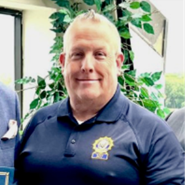
Bill Styskal
Bill Styskal began 1982 and has more than 40 years of law enforcement experience. He currently serves as a detective sergeant with the Stevens Institute of Technology police department. He attended the 26th session of the DELTA leadership class and William Paterson University where he studied Business Management. Most recently he completed the Federal Bureau of Investigation’s LEEDA training achieving the Trilogy Award with FBI LEEDA.
GACP DIAMOND PARTNER


GACP PARTNERS