
ADVERTORIAL
Fall | 2026

Strengthening School Safety Through Communication, Collaboration, and Preparedness
Stephen Herold
Fall | 2026
The safety of our schools remains a top priority for law enforcement and district administrators alike. Ensuring an effective response to emergencies—whether they be active threats, natural disasters, or other crises—requires a well-coordinated effort between schools and their public safety partners. One of the most critical steps in strengthening this collaboration is consistent communication, joint planning, and preparedness exercises, including tabletop drills.
The Role of Communication and Collaboration
When seconds matter, clear lines of communication between law enforcement and school administrators can save lives. The ability of officers to quickly understand the school’s layout, coordinate with on-site personnel, and establish command procedures is directly tied to how well these groups have worked together before an incident occurs. Schools and police departments must develop strong relationships well before a crisis, ensuring that emergency plans are not just theoretical documents but actively rehearsed protocols.
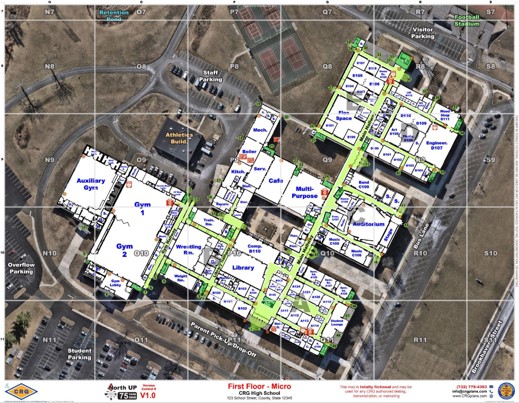
In recent years, the need for pre-established communication channels has become evident in high-profile school emergencies. In December 2024, Abundant Life Christian School in Wisconsin faced an active shooter situation. Fortunately, responding teams had access to the school’s CRGs, allowing them to quickly assess entry points, navigate hallways, and locate the threat. This access to real-time, accurate mapping data provided officers with critical situational awareness, demonstrating the impact of proper preparation and information-sharing between schools and law enforcement.
Tabletop Exercises: Rehearsing for Real-World Scenarios
One of the most effective ways to enhance school-law enforcement coordination is through tabletop exercises (TTX). These structured discussions provide an opportunity for key stakeholders—school administrators, local police, fire, EMS, and emergency management officials—to walk through potential scenarios in a controlled setting, identifying strengths and gaps in response procedures.
Critical Response Group (CRG) facilitates tabletop exercises modeled after pre-mission rehearsals used by U.S. Special Operations Forces, adapted for schools and public safety agencies. These exercises go beyond theoretical discussions by simulating real-world active threat events, testing response strategies, and strengthening coordination between all involved parties.
During a tabletop exercise, participants work through key response actions, including:
- Immediate actions by school staff and law enforcement personnel, both inside and outside the building.
- Establishing tactical command, staging areas, and perimeters to effectively contain threats.
- Coordinating multi-agency response between law enforcement, school officials, fire, and EMS.
- Incident command structure implementation and integrating outside resources.
- Communication procedures, emergency notifications, and evacuation strategies to ensure a rapid and effective response.
Rather than a competitive exercise, these sessions encourage open dialogue and problem-solving, exposing gaps in current response plans and allowing teams to refine their standard operating procedures. The goal is to ensure that when a real crisis occurs, there is no confusion about roles, responsibilities, or response actions.
The Role of Emergency Response Mapping in Effective Response
A critical component of any preparedness effort is ensuring that first responders have immediate access to standardized emergency response maps. Emergency response mapping has become a national priority, with more than 15 states passing laws or initiatives requiring schools to implement this technology.
In an emergency, miscommunication about locations within a school can cause delays that cost lives. Standardized emergency response maps provide a common operating picture for school staff and first responders, ensuring that everyone is working from the same set of information. When paired with tabletop exercises and ongoing collaboration between schools and law enforcement, mapping technology helps create a more prepared and coordinated response effort.
Moving Forward in Georgia
Many counties and school districts across Georgia have already begun implementing emergency response mapping as part of their preparedness efforts. Now is the time for law enforcement agencies to engage in planning, communication, and joint training with their local school districts.
By fostering strong partnerships, conducting regular drills, and ensuring that first responders have access to the best possible tools—including emergency response maps—we can enhance school safety and ensure that law enforcement agencies are ready to respond effectively when it matters most.
For more information on tabletop exercises, emergency response mapping, or best practices for school safety collaboration, please feel to email me at sherold@crgplans.com