
Article
FALL | 2025

Books and Badges
Special Education: The Potential for Civil Liability – A Guide for Law Enforcement Mark Kissel
By Billy Grogan
Fall | 2025
Mark Kissel’s Special Education: The Potential for Civil Liability – A Guide for Law Enforcement is an essential read for police officers, particularly those assigned to schools or who regularly interact with children in educational settings. With decades of experience in law enforcement and school safety, Kissel brings a unique and authoritative voice to a topic that is often misunderstood and overlooked—how civil liability can arise when law enforcement officers engage with students with special needs. Mark was a colleague who served as the Chief of Police for the Cherokee County School District until his retirement in 2019.
At its core, this book is a practical guide that helps officers understand their legal and ethical responsibilities when dealing with children protected under the Individuals with Disabilities Education Act (IDEA), Section 504 of the Rehabilitation Act, and the Americans with Disabilities Act (ADA). These federal laws provide students with disabilities a wide range of rights, and when officers unknowingly violate those rights—even with the best intentions—the consequences can be significant, both legally and in terms of public trust.
Kissel clearly explains how certain behaviors—such as non-compliance, outbursts, or even running away—can be signs of a child’s disability rather than intentional defiance. This distinction is crucial. Without proper training and awareness, officers may respond in ways that escalate the situation, resulting in physical confrontations, wrongful arrests, or disciplinary actions that infringe on the student’s legal rights. The book offers several real-world examples and hypothetical scenarios to illustrate these challenges, anchoring the content in situations officers are likely to face.
One of the most valuable elements of the book is its focus on communication. Kissel offers concrete strategies for engaging with students who have autism, ADHD, emotional and behavioral disorders, or other special education classifications. He encourages officers to slow down interactions, use clear and simple language, and remain calm and patient, especially when a child is in crisis. These recommendations are not just theoretical—they are tied directly to reducing liability and ensuring that officers do not inadvertently violate a student’s rights.
The book also highlights the importance of collaboration among law enforcement, school administrators, special education staff, and families. Kissel emphasizes that officers should not operate in isolation when working with students who have IEPs (Individualized Education Programs) or 504 Plans. Instead, they should aim to understand each student’s needs and background, collaborate with school-based teams, and consider alternatives to punitive measures. This collaborative approach reflects a community-focused perspective on policing that values relationships and long-term solutions over immediate control or punishment.
What sets this book apart is its practical orientation. While it provides a thorough overview of the legal framework, it is not a dense legal treatise. Instead, Kissel writes in a direct, accessible style aimed at frontline officers. He anticipates the real questions officers have: “What should I do if a student with autism refuses to follow my directions?” or “How do I avoid liability if I have to restrain a child in crisis?” His answers are rooted in best practices and legal precedent, giving officers the tools they need to make informed decisions in the moment.
This book should be required reading for school resource officers (SROs). However, its relevance extends beyond the school setting. Patrol officers responding to incidents involving youth, detectives investigating school-related crimes, and supervisors managing officers in community policing roles would all find Kissel’s guidance valuable. As the national discussion around policing practices in schools—particularly concerning children with disabilities—continues, this book arrives at a crucial moment.
Special Education: The Potential for Civil Liability provides police officers with a clear, compassionate, and legally sound guide for working with students with special needs. It encourages a balanced approach between safeguarding students’ rights and maintaining school safety. By studying and applying the principles in this guide, officers protect themselves from liability and, more importantly, help foster a safer, more supportive environment for our most vulnerable students. Mark Kissel has contributed greatly to law enforcement—and the children we serve—with this important work.
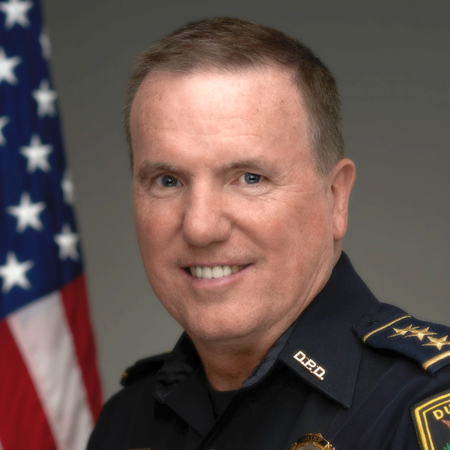
Chief Billy Grogan (Ret.)
Chief Billy Grogan (Ret.) is the President of Top Cop Leadership, a law enforcement leadership website designed to assist aspiring law enforcement leaders achieve their promotional goals up to and including being appointed as a police chief. Chief Grogan has over 43 years of law enforcement experience and 13 years as the Dunwoody Police Chief. He is a graduate of the FBI National Academy, Georgia Command College, and the Georgia International Law Enforcement Exchange (GILEE). He holds a Master’s Degree in Public Administration from Columbus State University.