
Article
Summer | 2025

Books and Badges
Beat Cop to Top Cop: A Tale of Three Cities by John Timoney
By Billy Grogan
Summer | 2025
I had the opportunity to meet Chief John Timoney on several occasions: once while he was still with the New York Police Department and a couple of times when he served as the Philadelphia Police Commissioner. From my recollection, people either loved him or hated him.
He was outgoing and loved being the center of attention, but he also backed up his bravado with great knowledge, skills, and abilities gained from his wealth of experience. Although he has passed away, law enforcement leaders today can still learn a lot from Chief Timoney’s experience, which he chronicled in his book.
When John Timoney tells his story, he doesn’t just recount a career—he walks you through the evolution of modern policing, from the cracked sidewalks of the Bronx to the polished floors of executive command suites in Philadelphia and Miami. Beat Cop to Top Cop: A Tale of Three Cities is more than a memoir; it is a leadership primer for police chiefs, aspiring command staff, and anyone grappling with how to do the right thing in an often chaotic world of law enforcement.
From the first chapter, Timoney establishes credibility not just through accolades and titles, but through grit. He started in the South Bronx at a time when it was one of the toughest beats in America. His early stories aren’t romanticized. They’re raw, full of the kinds of decisions that separate a street-smart cop from a thoughtful one. What makes these anecdotes stand out is that he never strays far from the idea that good policing must always be grounded in both courage and conscience.
For today’s law enforcement leaders, Timoney’s early years serve as a reminder that you cannot lead what you do not understand. His rise through the ranks was not propelled solely by political savvy but by his ability to blend street knowledge with academic rigor. He pursued a philosophy degree and applied that thinking to his police work—balancing enforcement with ethics, control with compassion.
One of the most pivotal sections of the book—and perhaps the most useful to current leaders—is Timoney’s role in the development and implementation of CompStat during his time in the NYPD. He worked alongside then-Commissioner William Bratton in transforming a struggling department into a data-driven powerhouse. Crime statistics were no longer abstract figures tucked away in reports—they became accountability tools. Timoney explains how weekly CompStat meetings held precinct commanders responsible for the crime in their areas, not with punitive threats, but with a culture of problem-solving and strategic planning. Many people would argue that the process was punitive, at least initially.
What stands out most here is how Timoney frames accountability. In an era where police departments face increasing scrutiny, he makes the case that accountability does not have to be adversarial. Instead, it can be a culture that supports both officers and the communities they serve. Timoney’s approach offers a grounded yet progressive model for current chiefs navigating transparency demands and body camera footage.
When Timoney was recruited to lead the Philadelphia Police Department in 1998, he faced a city deeply skeptical of its law enforcement. Homicide numbers were staggering, and public trust was hanging by a thread. In these chapters, readers see Timoney’s transformation from strategist to reformer. He introduced CompStat to Philadelphia and pushed hard on community policing—walking patrols, neighborhood meetings, and the kind of visibility that reconnects officers to the people they serve.
But Timoney also showed he wasn’t afraid to lead from the front. In a now-famous moment, just weeks into the job, he chased down a purse snatcher near Rittenhouse Square. This wasn’t theater—it was instinct. For modern leaders, this moment underscores a timeless principle: real credibility is earned, not granted. Your badge may open doors, but your actions open trust.
The final section of the book, which covers Timoney’s time in Miami, is perhaps the most compelling case study in cultural change within a police department. Miami PD had been plagued by excessive use of force and community distrust. Timoney implemented policies that drastically reduced officer-involved shootings, including the requirement that sergeants personally supervise scenes involving force or foot pursuits. The result? A stunning 20-month period where not a single shot was fired by officers in a city with one of the country’s most dynamic crime landscapes.
This portion of the book should be required reading for anyone looking to build a healthier police culture. Timoney doesn’t claim to have eradicated all problems but demonstrates how leadership, policy, and tone from the top can completely reshape an organization. He’s frank about the resistance he encountered, particularly from unions and entrenched power structures, but he never veers into bitterness. Instead, he uses those moments to talk about perseverance, about the moral duty of leadership to press forward, even when it’s unpopular.
For current and future law enforcement leaders, Beat Cop to Top Cop serves as a casebook on strategic change, ethics, and resilience. It challenges the reader to think beyond the badge and imagine what kind of legacy they want to leave behind. Timoney never shies away from the realities of policing—he confronts them head-on—but always returns to one central idea: policing is a public trust.
Another valuable aspect of the book is its accessible tone. Despite the gravity of the issues, he discusses—crime, race, reform, misconduct—Timoney writes with clarity and even humility. He owns his mistakes, admits where things didn’t work, and gives credit where it’s due. For leaders who often find themselves in the crosshairs of public opinion, this humility is both instructive and refreshing.
What ultimately makes Beat Cop to Top Cop a meaningful read is that Timoney never loses sight of the people. Whether he’s talking about victims, cops on the beat, or skeptical community members, he writes with a human touch. He reminds us that law enforcement is not about numbers or politics—it’s about people. And leading in this profession means never forgetting that.
For law enforcement leaders searching for guidance in a time of immense challenge and change, Timoney’s voice is one worth listening to. Beat Cop to Top Cop is more than a book—it’s a mentor in print. And that kind of mentorship is invaluable in a profession that often feels isolated at the top.
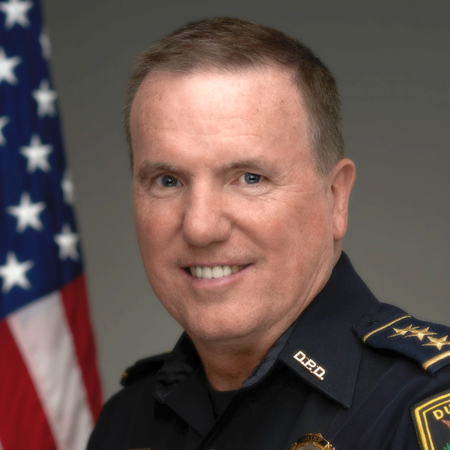
Chief Billy Grogan (Ret.)
Chief Billy Grogan (Ret.) is the President of Top Cop Leadership, a law enforcement leadership website designed to assist aspiring law enforcement leaders achieve their promotional goals up to and including being appointed as a police chief. Chief Grogan has over 43 years of law enforcement experience and 13 years as the Dunwoody Police Chief. He is a graduate of the FBI National Academy, Georgia Command College, and the Georgia International Law Enforcement Exchange (GILEE). He holds a Master’s Degree in Public Administration from Columbus State University.